Research
My research spans machine learning and computer vision, with a focus on probabilistic graphical models, scalable Bayesian inference (MCMC and variational methods), deep learning, and reinforcement learning.
My Ph.D. thesis introduced herding, a deterministic sampling algorithm that takes a probabilistic distribution or a set of random samples as input and produces pseudo-samples without an explicit generative model. These pseudo-samples are strongly negatively correlated, carrying more information about the underlying distribution than i.i.d. samples of the same size. I also worked on Bayesian inference for Markov random fields and on efficient, scalable MCMC methods.
As a postdoc at Cambridge with Prof. Zoubin Ghahramani, I focused on making Bayesian inference for nonparametric models as scalable and practical as gradient-based optimization. Directions I explored include:
- Scalable approximate MCMC for large-scale Bayesian inference — an analogue of stochastic gradient descent in the probabilistic setting.
- Distributed sampling for Bayesian nonparametric clustering and topic modelling.
- Hybrid algorithms combining stochastic variational inference with MCMC for accurate posterior estimation in Gaussian process dynamical systems and nonlinear latent variable models.
At DeepMind, my work spans generative models, meta-learning, reinforcement learning, Bayesian inference, and causal inference — with applications to game playing, speech synthesis, video generation, and robotics.
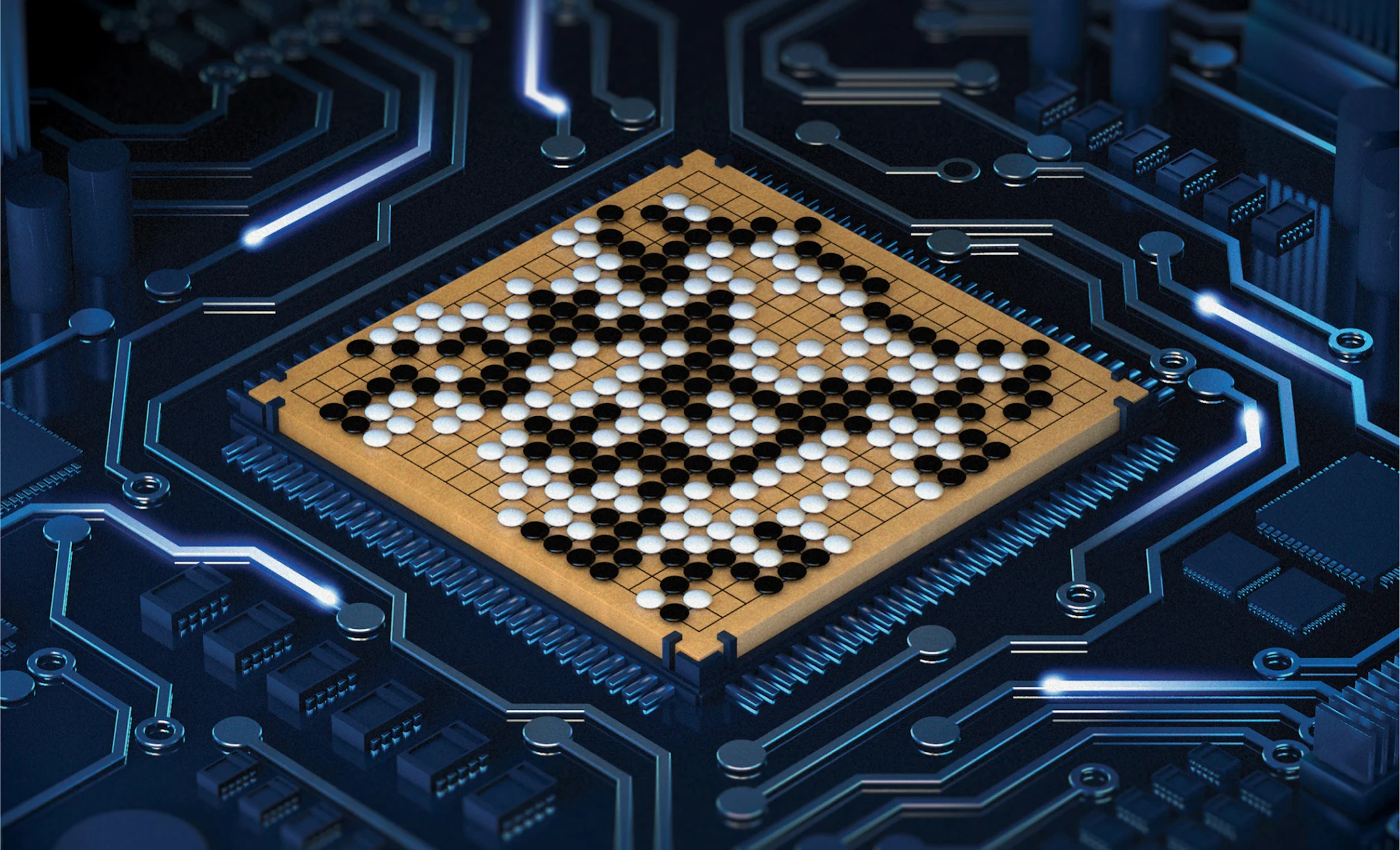

I feel very privileged to have taken part in the AlphaGo project at DeepMind and helped build an AI program for game Go. AlphaGo beat the world champion, Lee Sedol, in 4 out of 5 games in 2016, defeated 60 top professionals online and world's number one player, Ke Jie, in 3 out of 3 games in 2017.
IJCAI Marvin Minsky Medal 2018
The DeepMind AlphaGo team received the Inaugural IJCAI Marvin Minsky Medal for Outstanding Achievements in AI in 2017.
We also developed a new version AlphaGo Zero that was trained from scratch without human knowledge and surpassed all the previous versions of AlphaGo after 21 days of training.
Published in Nature · Oct 2017
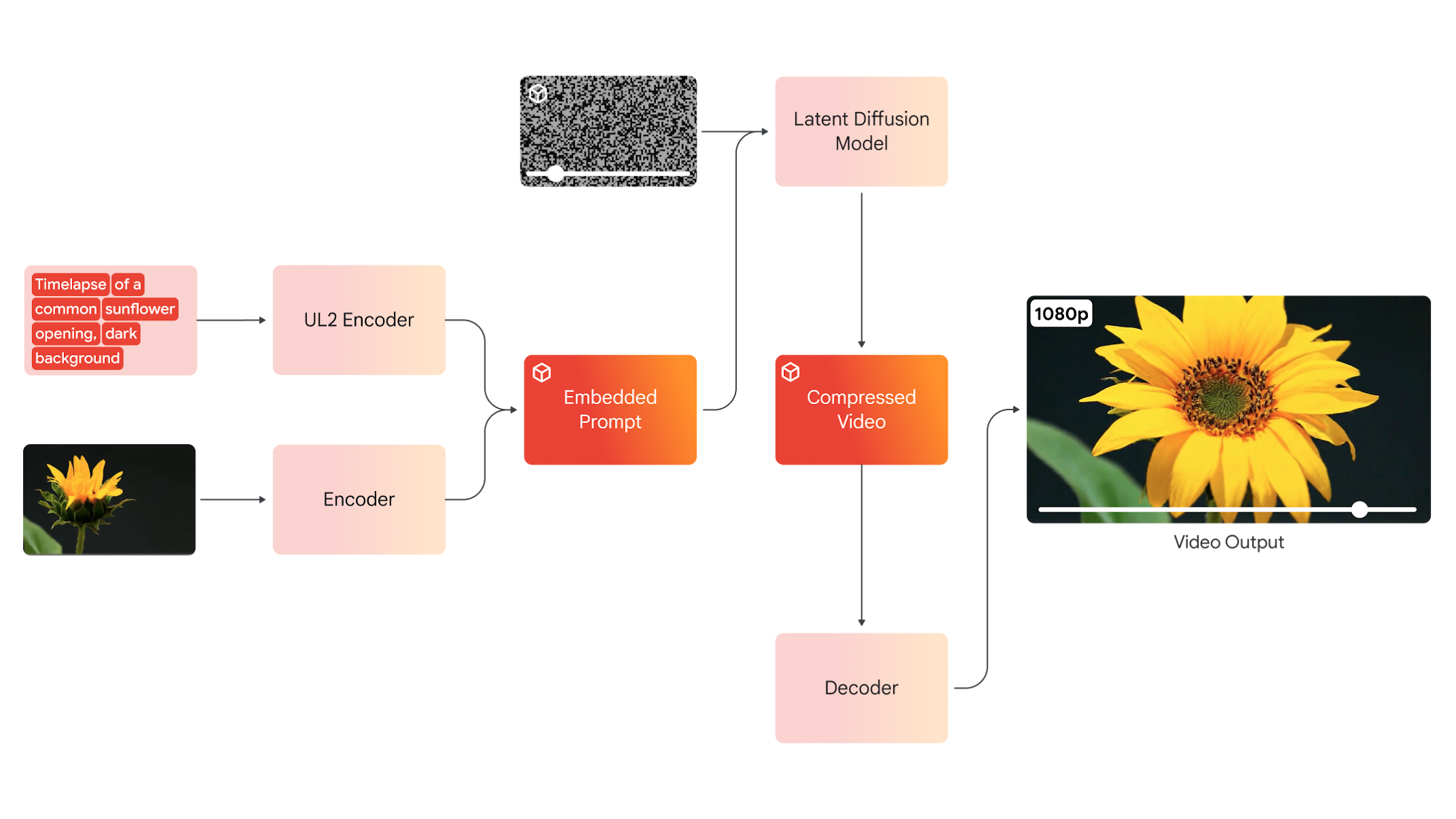
Veo ("to see" in Spanish) is Google's most capable generative video model as of 2024.
It generates high-quality, 1080p resolution videos that can go beyond a minute, in a wide range of cinematic and visual styles. The generated videos closely follow the prompt and maintain visual consistency. It also supports image-to-video generation.
I lead the development of decoding and super-resolution models.
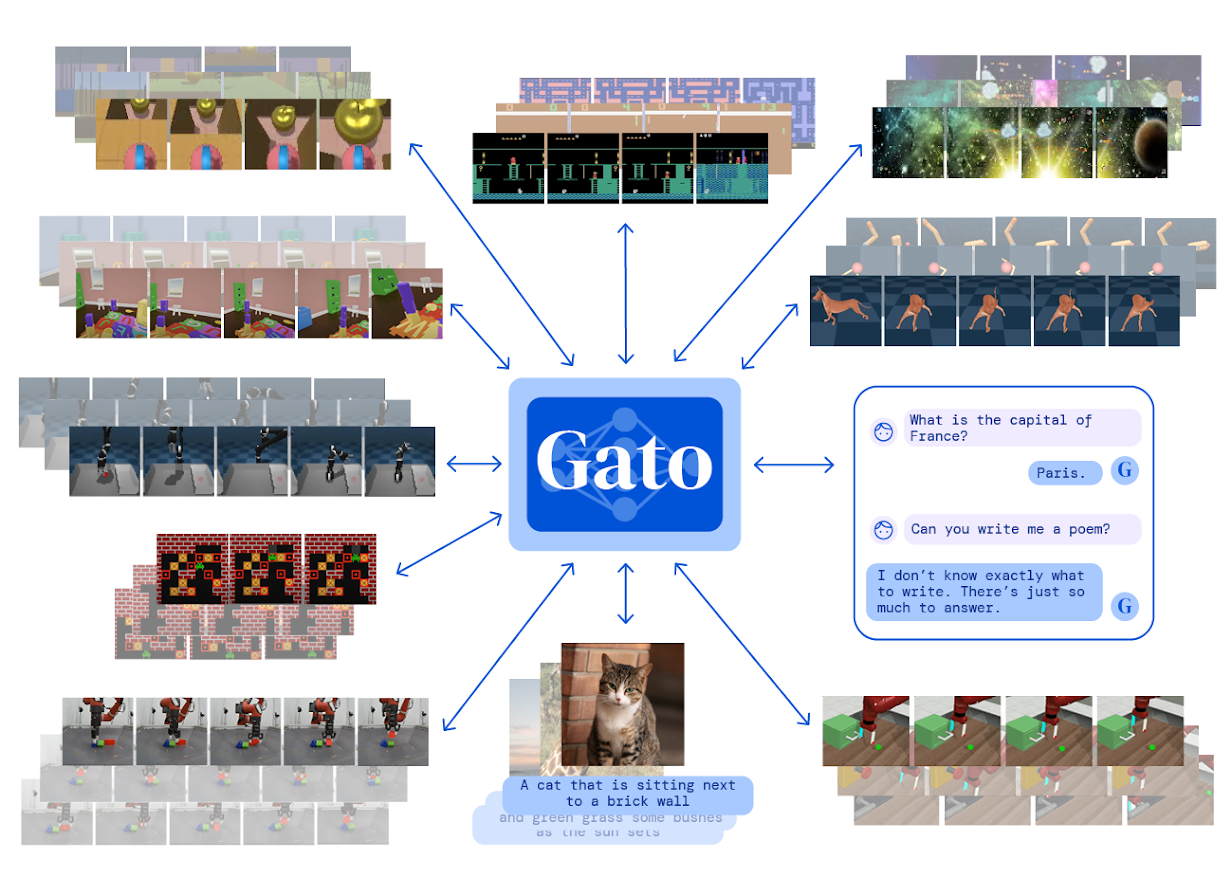
Gato is the first multi-modal, multi-task, multi-embodiment generalist agent that can do dialogue, visual question answering, video gaming and robotics control.
The same network with the same weights can play Atari, caption images, chat, stack blocks with a real robot arm and much more, deciding based on its context whether to output text, joint torques, button presses, or other tokens.
TMLR Outstanding Paper 2022
Awarded the TMLR Outstanding Paper in 2022, equivalent to a best paper award at a top-tier conference.

I have been passionate in developing better zeroth-order optimization algorithms with meta-learning over the years for applications in hyperparameter optimization, experimental design, and robotics evaluation.
I published one of the earliest meta-learning papers for black-box optimization in 2017, Learning to Learn without Gradient Descent by Gradient Descent.
We also proposed the first foundation models for hyperparameter optimization in 2022, OptFormer, which takes advantage of Google's massive dataset of hyperparameter tuning experiments and is competitive with the GP-based Bayesian optimization algorithm used in production. Check the Google Scholar page for more works along this line of research.
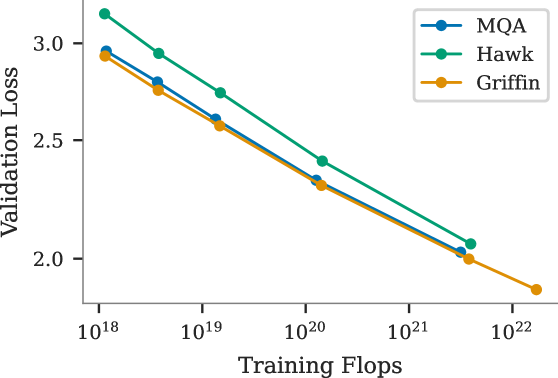
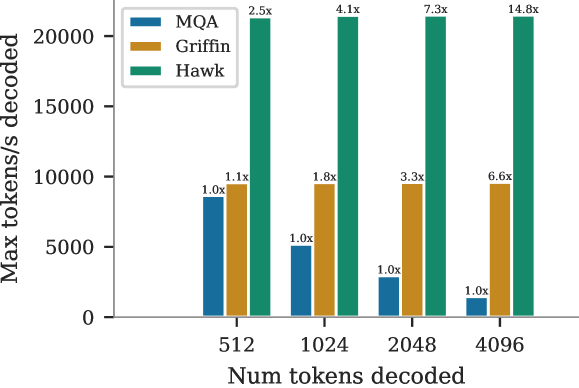
We scaled up a linear recurrent model to 14B parameters. It matches the Gemini performance at the same scale and achieves a much higher inference speed.
This is Google's internal variant of the State Space Model, an alternative to the transformer architecture, and concurrent work of the external Mamba model.
We proposed two variants: Hawk, a pure linear recurrent model, and Griffin, a hybrid and the most performing model. They have been open-sourced as RecurrentGemma.
I lead the project to synthesize high-fidelity voices with minimal recorded speech data through the method, Sample Efficient Adaptive Text-to-Speech.
We collaborated with Google Project Euphonia and empowered speech-impaired ALS patients for the first time to communicate in their original voice. Reported in the YouTube documentary series "The Age of A.I.". The same idea is also applied to power Google's custom voice service.
We also developed video dubbing technology to automatically translate and dub videos into multiple languages at scale, saving expensive human dubbing cost.
Our model kept the original speaker's voice in the dubbed video and synced their lip movement so that foreign language audiences received the same watching experience as native speakers.